AI Handles the Complicated. Make the Complex Your Domain.
Scientist Practitioner is the guiding model behind all BRAIN-HR executive programs: a shared scientific core across neuroscience, psychology, systems theory, behavioural economics and AI; specialised tracks for Learning & Development, Consulting and AI for L&D + Change; and the three-year part-time Masterclass fellowship above them. Built for experienced trainers, consultants, executive coaches and L&D leaders working on their own real-world projects — up to ISO/IEC 17024 certification by TÜV Rheinland.
25 Minutes of Straight Talk: Book an Advisory CallOur autumn 2026 cohort (Cohort V) is currently underway. The next cohorts start in January 2027 in English (ST-EN-1, Mondays from 11 January 2027) and in German (ST-DE-1, Tuesdays from 12 January 2027). Eligible for corporate L&D stipends and employer tuition assistance.
The Terrain
The Age of AI Is an Age of Scientific Judgement.
Artificial intelligence executes ideas faster and more fluently every month; our thinking has gained a powerful exoskeleton. A slide deck, workshop outline or coaching framework can be generated in minutes. What is not generated with it is the scientific judgement of whether it actually works. In the landmark field study by Harvard Business School and Boston Consulting Group, consultants working with AI were significantly faster and produced higher-quality results inside the machine’s capability boundary — yet as soon as a task crossed that “jagged technological frontier”, the advantage flipped into a measurable performance penalty (Dell’Acqua et al., 2023).
For everyone whose profession is developing people and organisations, the stakes reach far beyond their own practice: your clients and participants will only navigate this transformation if someone equips them with genuine future capability. Anyone who teaches future readiness must stand at the frontier themselves.
That is why Scientist Practitioner today means both science and technology: reading primary studies yourself, measuring empirical effect sizes yourself, and mastering the learning technologies through which development will happen tomorrow — from AI research workflows to immersive formats. Science and Technology of Future Learning: that is the standard against which executive development is now measured.

Complexability — the capacity to navigate complexity while staying connectable to what matters next — is the core executive meta-skill of our era. And it has an organisational twin that determines enterprise competitiveness: Absorptive Capacity (Cohen & Levinthal, 1990), the speed at which an organisation identifies, assimilates and applies validated new knowledge. Scientist Practitioners build both with empirical data and validated instruments.
The Model
What a Scientist Practitioner Is — From the 1949 APA Boulder Model to Modern L&D.
Scientist Practitioners use scientific method as the everyday operating system of their practice: they evaluate peer-reviewed studies directly, test claims against evidence, measure the effect sizes of their own interventions, and build signature programs on empirically defensible ground.

The model originates from the historic 1949 Boulder Conference of the American Psychological Association (Baker & Benjamin, 2000). Across medicine and clinical psychology, clinician-scientist pathways have anchored professional authority for decades.
Yet a striking gap remained: almost every high-stakes profession in healthcare and education rests on a binding, scientifically audited qualification standard — except corporate Learning & Development, the discipline with the most immediate lever on organisational performance. The Scientist Practitioner in Learning & Development closes this gap, holding leadership and workforce development to the same empirical rigor that medicine and psychology established generations ago.
Program Architecture
One Shared Scientific Foundation, Three Specialised Tracks, One Masterclass.
Just as medicine builds specialised residencies on a shared pre-clinical foundation, the Scientist Practitioner curriculum builds specialised tracks on a shared scientific core: the first six live online sessions are identical across all tracks, the second six deepen your chosen specialisation, followed by a final presentation day where you defend your transfer concept. External personnel certification by TÜV Rheinland to ISO/IEC 17024 serves as the admission gate to the three-year Masterclass fellowship.
Learning & Development
6 transfer sessions
Executive Consulting
6 transfer sessions
AI for L&D + Change
6 transfer sessions
Accredited Personnel Certification to ISO/IEC 17024
Explore the pathways in detail:
 Track 02: Executive Consulting
Participants who wish to complete a second specialisation only take the six transfer sessions of the additional track; nobody repeats the shared six-unit foundation.
Who It Serves
For Independent Trainers, Executive Coaches & Consultants.
Most experienced practitioners who come to us already have a full toolkit of methods. The Scientist Practitioner program builds the scientific bedrock underneath: you understand why interventions succeed or fail, strip out pop-psychology myths, and build signature offerings tied to your personal authority that cannot be commoditised by AI.
For Enterprise CLOs, HR & L&D Leaders.
Your standing at the executive table hinges on whether L&D is viewed as a discretionary cost center or a strategic growth function. That question is decided by the empirical rigor with which you speak to the CEO and CFO. Organizations also enrol entire internal L&D teams (dedicated in-house cohorts from 7 seats) with a dual payoff: upskilling internal architects while establishing scientific due diligence for external vendor selection.
Track Record & Accreditation
Five Years Proven in Practice. Audited to ISO/IEC 17024.
This continuing education program has matured over five years under the name Scientific Trainer. 49 graduates are certified in our public registry, and external personnel certification has been audited by TÜV Rheinland to ISO/IEC 17024 since 2023. The program is backed by the NET OF BRAINS Think Tank (laureate of the 2022 German Demography Award) and led by Dr. rer. medic. Franz Hütter, Full Member of the Institute of Coaching at McLean Hospital (Harvard Medical School affiliate) and Teacher Status Member of the American Psychological Association (APA).
“I now design my training so that even more knowledge transfer and lasting effect is possible. Absolutely worth recommending.”
Birgit Thedens · Chair of the Board, German Association for Coaching & Training (dvct)
Part II · Unabridged Homepage Background Sections
Complexability, L&D Under Pressure & All Six Building Blocks in Detail.
Below you find the complete, unabridged background sections from the original homepage preserved as a comprehensive reference dossier.
L&D UNDER PRESSURE
In the AI era, scientific substance pays off twice.
Budgets are shrinking, AI is changing the playing field, and impact has to be justified. Anyone who builds L&D on scientific substance has the better arguments in the next budget round.
Absorptive capacity decides
Competitive advantage comes from the speed at which your people absorb new knowledge and turn it into impact. Economists call this absorptive capacity, researched since 1990.
AI raises the bar, if the people using it are up to it
AI makes competent minds more valuable. Its impact depends on how confidently your people handle complexity. Scientific method trains exactly the analytical, critical and innovative thinking that the World Economic Forum's Future of Jobs Report 2025 identifies as a top future skill and growth driver.
Impact calls for numbers
Happy sheets stopped convincing the C-suite long ago, and rightly so. If you cannot express the impact of L&D investments in effect sizes, you lose them in the next budget cycle. This is where our approach starts: first the ROI analysis, then valid measurement of effects and the scientific explanation. That is how soft skills become hard facts.

Science is the blueprint for future learning.
Dr. Franz Hütter
THE COMMON DENOMINATOR · COMPLEXABILITY
AI is taking over parts of our thinking. What counts now is Complexability.
The industrial revolution replaced muscle power. AI is now taking over parts of human thinking, precisely in demanding knowledge work. What gains value is what sits above it: analytical, critical and creative thinking, and the ability to stay connectable to what will be needed from now on.
We call this Complexability: the capacity for complexity plus the capacity to connect. It is built in those who design learning for others. From there it travels on into organisations, teams and client projects.
In the video · 6 minutes
Franz Hütter on Complexability.
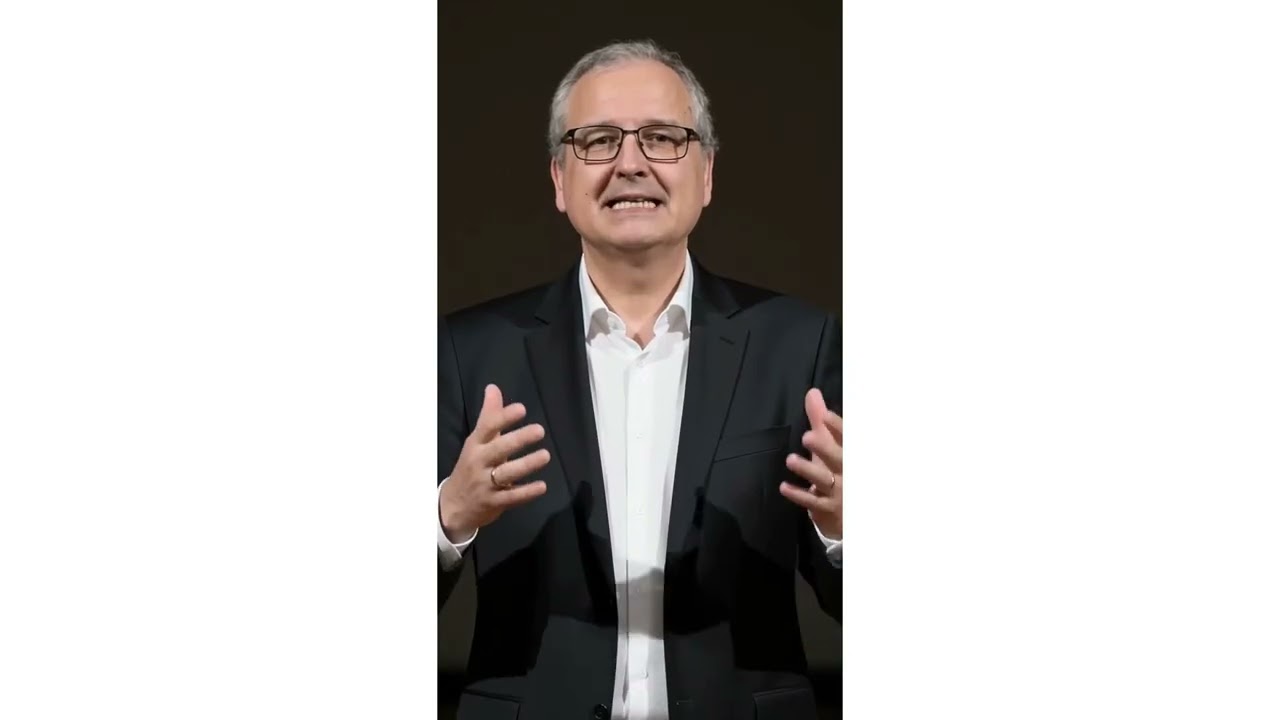
A connection to YouTube is only opened once you click.
WHAT WE OFFER
Six building blocks, usable on their own or one after another.
The Science Lunch is the free way in. From there you can go deeper into single topics in the Hard Facts Seminars, or go further with the Scientific Trainer Program and the Masterclass. Software, evaluation and consulting support the work in your own practice.
Scientific Trainer Program
The scientific upgrade for experienced trainers, consultants and L&D professionals: 12 evening webinars plus a closing day, part-time and online, €2,900 (~$3,150 USD) plus VAT. So that what you can really do becomes visible. Audited by TÜV Rheinland to ISO/IEC 17024 and publicly verifiable on TÜV Certipedia.
See the program → For companies: corporate programme →SOFTWARE VISION
Scientific due diligence, automated.
Just as job applications are pre-screened automatically today, our software suite checks incoming training offers, programme concepts and methods against the scientific literature and against standards from learning research.
Pop psychology loses its ground. You measure impact in hard numbers. Scientifically grounded learning becomes standard due diligence in the L&D budget.
SIX ENGINES IN TWO SUITES
- L&D Tools: Evidence Check, Learning Design Check, BRAIN-HR LMS
- Science Tools: MetaAnalysis Studio, Encephalon Studio, SNP Browser
All six engines are available via flexible prepaid credit packs with no annual or lifetime license lock-in.